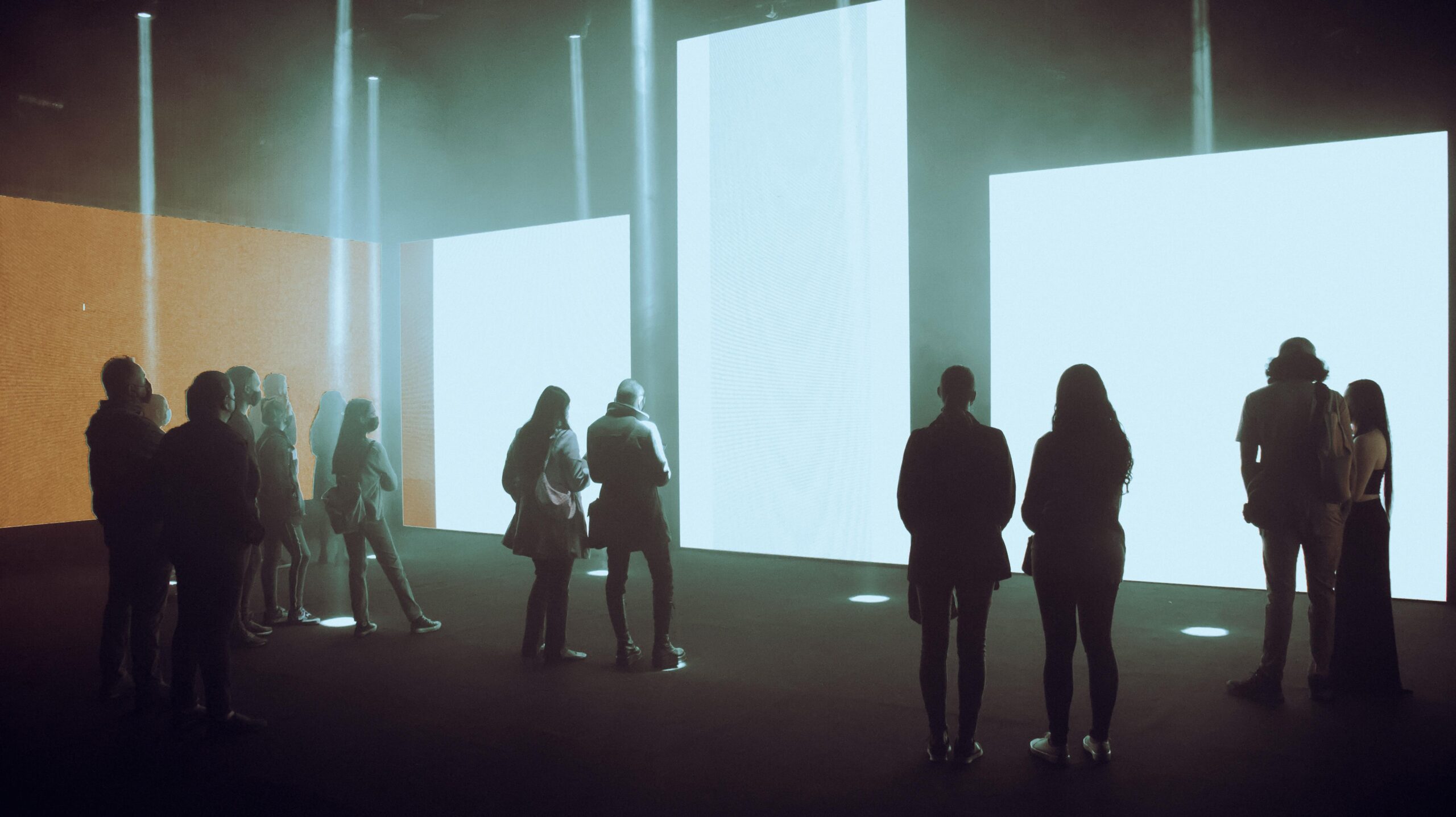
Interactive theater design is revolutionizing the way audiences experience live performance, blurring the lines between spectator and participant in unprecedented ways.

The evolution of theatrical experiences has reached a transformative moment where traditional passive viewing gives way to dynamic engagement. This shift represents more than just a trend; it’s a fundamental reimagining of what theater can be when audiences become active co-creators of the narrative journey. As technology advances and audience expectations evolve, immersive theater stands at the forefront of experiential entertainment, challenging conventions and opening new pathways for creative expression.
🎭 The Evolution of Audience Participation in Theater
The concept of audience participation isn’t entirely new to theater. From ancient Greek chorus interactions to medieval mystery plays, theatrical traditions have long incorporated elements of audience engagement. However, contemporary interactive theater design takes this concept to remarkable new dimensions, leveraging technology, spatial design, and narrative innovation to create truly transformative experiences.
Traditional theater established a clear fourth wall—an invisible barrier separating performers from spectators. This convention served important purposes, allowing audiences to observe stories unfold with emotional safety and critical distance. Yet as cultural consumption patterns shifted toward more participatory media, theater artists began questioning whether this separation still served modern audiences seeking deeper connection and agency.
The breakthrough came when designers recognized that removing the fourth wall wasn’t about forcing participation but rather creating environments where engagement felt natural, meaningful, and essential to the storytelling itself. This philosophical shift opened possibilities for theatrical experiences that respond to, incorporate, and celebrate audience presence as a fundamental design element.
Breaking Down the Fourth Wall: Design Principles for Immersive Spaces
Creating effective immersive theater requires careful attention to spatial design principles that fundamentally differ from traditional proscenium arrangements. The architecture of the performance space becomes as critical as the script itself, shaping how audiences move, interact, and emotionally connect with the narrative world.
Spatial Choreography and Audience Flow
Successful immersive theater design begins with understanding audience movement as choreography. Designers must anticipate traffic patterns, create natural gathering points, and establish pathways that guide without constraining. Unlike traditional seating arrangements where sightlines focus on a single stage, immersive environments require 360-degree consideration where every corner potentially becomes a performance space.
This approach demands meticulous planning of how crowds will distribute themselves throughout the venue. Strategic placement of compelling scenes in different areas naturally draws audience members to explore, while subtle environmental cues—lighting changes, sound design, architectural features—guide flow without explicit direction. The goal is creating a sense of discovery where audiences feel they’re choosing their own adventure while actually moving through a carefully orchestrated experience.
Creating Layers of Narrative Depth
Effective immersive theater operates on multiple narrative layers simultaneously. The surface story provides accessible entry points for all participants, while deeper layers reward curiosity, exploration, and repeated engagement. This stratified approach ensures that audiences with different participation comfort levels can all find meaningful connection to the work.
Designers achieve this through environmental storytelling—embedding narrative clues in set decoration, costume details, overheard conversations, and hidden rooms. Some audience members may engage primarily with the main narrative thrust, while others dive into secondary character arcs or decode symbolic elements woven throughout the space. This multiplicity of entry points transforms single performances into highly personalized experiences where each audience member crafts their own unique story from the available material.
Technology as Enabler: Digital Tools Transforming Interactive Performance
Contemporary interactive theater increasingly incorporates digital technologies that expand what’s possible in live performance while maintaining the immediacy and authenticity that distinguishes theater from purely digital entertainment. When thoughtfully integrated, technology enhances rather than replaces human connection at the heart of theatrical experience.
Augmented Reality and Mixed Reality Applications
Augmented reality (AR) offers immersive theater designers powerful tools for layering digital information onto physical environments. Through smartphones or specialized headsets, audiences can perceive additional narrative dimensions invisible to the naked eye—ghostly characters, historical overlays, symbolic visualizations, or interactive elements that respond to their presence and choices.
This technology proves particularly effective for historical or fantastical narratives where the gap between present reality and story world requires bridging. AR can transform ordinary spaces into magical realms without expensive physical set construction, making ambitious immersive projects more financially accessible. The key lies in ensuring technology serves narrative purpose rather than becoming gimmicky distraction from human performance.
Interactive Sound Design and Binaural Audio
Sound design plays crucial roles in immersive theater, creating atmosphere, guiding attention, and establishing emotional tone. Advanced audio technologies enable sophisticated approaches where individual audience members receive personalized soundscapes through wireless headphones, creating intimate acoustic experiences within shared physical spaces.
Binaural recording techniques create three-dimensional audio that responds to head movement, placing listeners inside soundscapes with remarkable spatial accuracy. Combined with GPS or beacon technology, sound design can trigger location-specific audio as audiences move through performance spaces, creating seamless transitions between scenes and providing narrative context without visible signage or explicit direction.
🎪 Participatory Mechanics: Balancing Agency and Narrative Structure
The central challenge in interactive theater design involves balancing audience agency with narrative coherence. Too much structure and the experience feels rigid, negating the promise of participation. Too little and it devolves into chaos where story dissolves into disconnected moments. Successful designs navigate this tension through sophisticated participatory mechanics.
Choice Architecture in Narrative Design
Effective interactive theater employs choice architecture—designing decision points that feel meaningful while maintaining narrative momentum toward intended thematic destinations. This mirrors concepts from game design where player agency operates within rule systems that shape outcomes without completely predetermining them.
Designers create branching narrative structures with multiple paths that reconverge at key story beats, ensuring all audience members encounter essential plot information regardless of their specific journey. Individual choices affect the texture, emotional tone, and specific details of their experience while the overarching narrative architecture remains intact. This approach provides genuine agency without requiring impossibly complex storylines that account for every possible combination of audience decisions.
Role Assignment and Character Frameworks
Many immersive productions assign audiences specific roles, characters, or factions that frame their participation within the larger narrative. This technique provides comfortable structure for participants uncertain about how to engage while creating natural reasons for audience members to pursue different objectives, generating organic dramatic tension.
Role assignment works best when it offers clear motivations without prescribing specific actions. A simple framework—”you’re a wedding guest who suspects the groom,” “you’re a detective investigating strange occurrences,” or “you’re a newcomer to this community”—provides enough structure to ground participation while leaving space for individual interpretation and spontaneous response to unfolding events.
Designing for Different Participation Comfort Levels
Audience members bring varying degrees of comfort with participation to immersive theater experiences. Some eagerly embrace active roles, while others prefer observation. Sophisticated design accommodates this spectrum, creating multiple valid ways to engage that all feel valued and integral to the experience.
The Spectrum of Engagement
Research in participatory performance identifies several engagement levels audiences naturally gravitate toward:
- Observers: Prefer watching from margins, absorbing atmosphere and narrative without direct interaction
- Explorers: Actively move through space investigating environmental details but avoid direct performer contact
- Interactors: Comfortable with performer engagement when initiated by actors but rarely initiate themselves
- Collaborators: Actively seek opportunities to influence narrative, engage performers, and shape story outcomes
- Leaders: Take initiative in organizing other audience members and driving narrative action
Excellent immersive design creates meaningful experiences across this entire spectrum. Environmental storytelling serves observers, hidden discoveries reward explorers, responsive performers engage interactors, and choice points empower collaborators and leaders. No single participation style should feel superior or more valid than others.
Safe Words and Exit Strategies
Ethical immersive theater design includes clear consent protocols and exit strategies. Before experiences begin, audience members should understand what participation might entail, what boundaries performers will respect, and how to signal when they need space or wish to disengage from interaction.
Many productions establish simple visual or verbal cues—crossing arms, saying specific words, or wearing colored lanyards—that immediately communicate boundaries to performers. These systems protect audience comfort while maintaining immersion, as performers can seamlessly adjust their approach without breaking character or drawing unwanted attention to individual audience members’ boundaries.
📱 Case Studies in Interactive Theater Innovation
Examining successful immersive theater productions reveals practical applications of these design principles and offers inspiration for future innovation in the field.
Sleep No More: Pioneering Large-Scale Immersion
Punchdrunk’s “Sleep No More” established many conventions that define contemporary immersive theater. Set in a sprawling multi-floor hotel, the production adapts Shakespeare’s Macbeth into a film noir aesthetic where masked audience members freely roam spaces following characters of their choosing. The production demonstrates how to create coherent narrative across vast spaces with simultaneous scenes, using loops that allow audiences to track individual character arcs or sample multiple storylines.
Key innovations include the anonymizing white masks that free audiences from self-consciousness while creating striking visual uniformity, the one-on-one encounters where performers pull individual audience members into private moments, and the detailed environmental design that rewards close examination with narrative discovery. These elements combine to create highly replayable experiences where multiple visits reveal new layers and perspectives.
Then She Fell: Intimate Scale and Sensory Design
Third Rail Projects’ “Then She Fell” demonstrates how intimacy can intensify immersive theater impact. Limited to just 15 audience members per performance, the production based on Lewis Carroll’s life and writings creates deeply personal encounters through small audience-to-performer ratios, physical interaction, and multi-sensory design including taste and touch elements.
This approach proves that immersive theater need not always operate at massive scale. Smaller productions can achieve profound connection through proximity and attention to sensory detail that larger productions cannot sustain. The production’s success validates multiple business models for immersive work, from blockbuster spectacles to boutique experiences.
🎨 The Psychology of Participation: Why Audiences Become Storytellers
Understanding the psychological mechanisms that transform passive viewers into active storytellers helps designers create more effective immersive experiences. Several key psychological principles explain why interactive theater proves so compelling for contemporary audiences.
Agency and the Illusion of Control
Humans possess fundamental psychological needs for agency—the sense that our actions matter and influence outcomes. Interactive theater satisfies this need by providing genuine choices and apparent control over narrative direction. Even when choices ultimately lead to predetermined destinations, the experience of choosing creates powerful emotional investment in outcomes.
This connects to what psychologists call the “IKEA effect”—we value things more when we’ve participated in creating them. When audiences help shape theatrical narratives through their choices and actions, they develop deeper emotional connection to the story and characters than passive observation typically generates. This invested participation creates memorable experiences that audiences discuss, analyze, and return to repeatedly.
Embodied Cognition and Spatial Memory
Immersive theater leverages embodied cognition—the principle that physical movement and spatial navigation enhance memory and understanding. When audiences physically move through narrative spaces, their memories of the experience become tied to bodily sensations and spatial relationships rather than just visual and auditory information.
This creates unusually vivid, durable memories compared to seated theater viewing. Audience members recall not just what they saw but where they stood, how they moved, what they touched, and who they stood beside. These multisensory, spatially grounded memories feel more personal and significant, contributing to immersive theater’s powerful impact despite often higher ticket prices than traditional productions.
Challenges and Considerations in Interactive Theater Design
While immersive theater offers exciting possibilities, designers must navigate significant challenges including accessibility, safety, scalability, and artistic control.
Physical and Cognitive Accessibility
Many immersive designs assume audience mobility, presenting accessibility challenges for people with physical disabilities. Venues with multiple floors, dim lighting, standing-room-only configurations, and rapid movement between spaces can exclude participants with mobility, vision, or cognitive disabilities.
Progressive designers address these issues through universal design principles—creating multiple pathways to narrative access, offering assisted viewing options, incorporating seated experiences into roaming formats, and training performers to adapt interactions for diverse audience needs. The goal should be ensuring all audience members can access the core narrative and emotional journey regardless of their physical capabilities.
Managing Audience Behavior and Safety
Granting audiences freedom to move and interact creates potential safety concerns and behavioral challenges. Designers must anticipate how crowds behave in unstructured environments, plan for emergency evacuation, prevent damage to sets and props, and protect both performers and audience members from inappropriate behavior.
This requires comprehensive staff training, clear pre-show orientation, strategic placement of ushers throughout performance spaces, and robust protocols for addressing problems without disrupting other audience members’ experiences. The most successful productions make these safety measures feel natural rather than intrusive, maintaining immersion while ensuring all participants remain physically and emotionally safe.
🌟 The Future of Interactive Theater Design
Looking forward, several emerging trends promise to further transform how interactive theater operates and what experiences become possible.
Artificial Intelligence and Responsive Narratives
Advances in artificial intelligence and natural language processing create possibilities for theatrical characters that genuinely respond to audience input rather than following predetermined scripts. AI-driven characters could engage in unrestricted conversation, remember previous interactions with returning audience members, and adapt narrative directions based on aggregate audience choices across multiple performances.
This technology remains in early stages for live performance applications, but experimental productions have begun incorporating chatbot-style interactions and branching dialogue systems that preview what sophisticated AI integration might enable. The challenge lies in maintaining the authentic human connection that distinguishes live performance while leveraging AI’s capacity for personalization and responsiveness.
Hybrid Digital-Physical Experiences
The COVID-19 pandemic accelerated experimentation with hybrid formats combining in-person and digital participation. This approach potentially expands access to immersive theater beyond geographic and economic limitations while creating new dramaturgical possibilities where physical and digital audiences interact across the boundary between real and virtual spaces.
Future productions might incorporate remote participants who influence in-person experiences through digital channels, creating meta-theatrical layers where online audiences serve as supernatural forces, surveillance operators, or parallel narrative tracks that occasionally intersect with physical action. These hybrid formats require rethinking fundamental assumptions about theatrical presence and liveness.

Creating Your Own Interactive Theater Experience
For artists and designers inspired to create immersive work, several practical considerations help translate theoretical principles into realized productions.
Start Small and Test Thoroughly
Begin with modest scope—single rooms or limited audience sizes—to develop expertise before attempting large-scale productions. Extensive testing with diverse audience members reveals how real people interact with designed experiences versus designer intentions. Iterate based on these observations, refining participatory mechanics and spatial choreography through multiple development phases.
Build Interdisciplinary Teams
Effective immersive theater requires expertise spanning traditional theater craft, spatial design, experience design, technology integration, and crowd management. Assemble teams with diverse skills and perspectives, ensuring all disciplines contribute to conceptual development rather than merely executing predetermined visions. The best immersive work emerges from genuine collaboration across specializations.
Center Audience Experience in Every Decision
Throughout design processes, continuously return to the fundamental question: What is the audience experiencing at this moment? Consider their physical comfort, emotional state, information needs, and participation opportunities. When artistic vision conflicts with audience experience, find creative solutions that honor both rather than sacrificing one for the other.
Interactive theater represents one of the most exciting frontiers in contemporary performance, offering audiences unprecedented opportunities to step inside stories and shape narratives through their choices and actions. As technology evolves and designers continue innovating, the boundary between audience and artist will grow increasingly permeable, creating collaborative theatrical experiences that genuinely transform spectators into storytellers. This revolution in how we create and consume live performance holds immense potential for deeper connection, more memorable experiences, and renewed relevance for theater in an increasingly digital world. The future of storytelling is immersive, participatory, and profoundly human—and it’s being designed right now by artists bold enough to reimagine what theater can be.