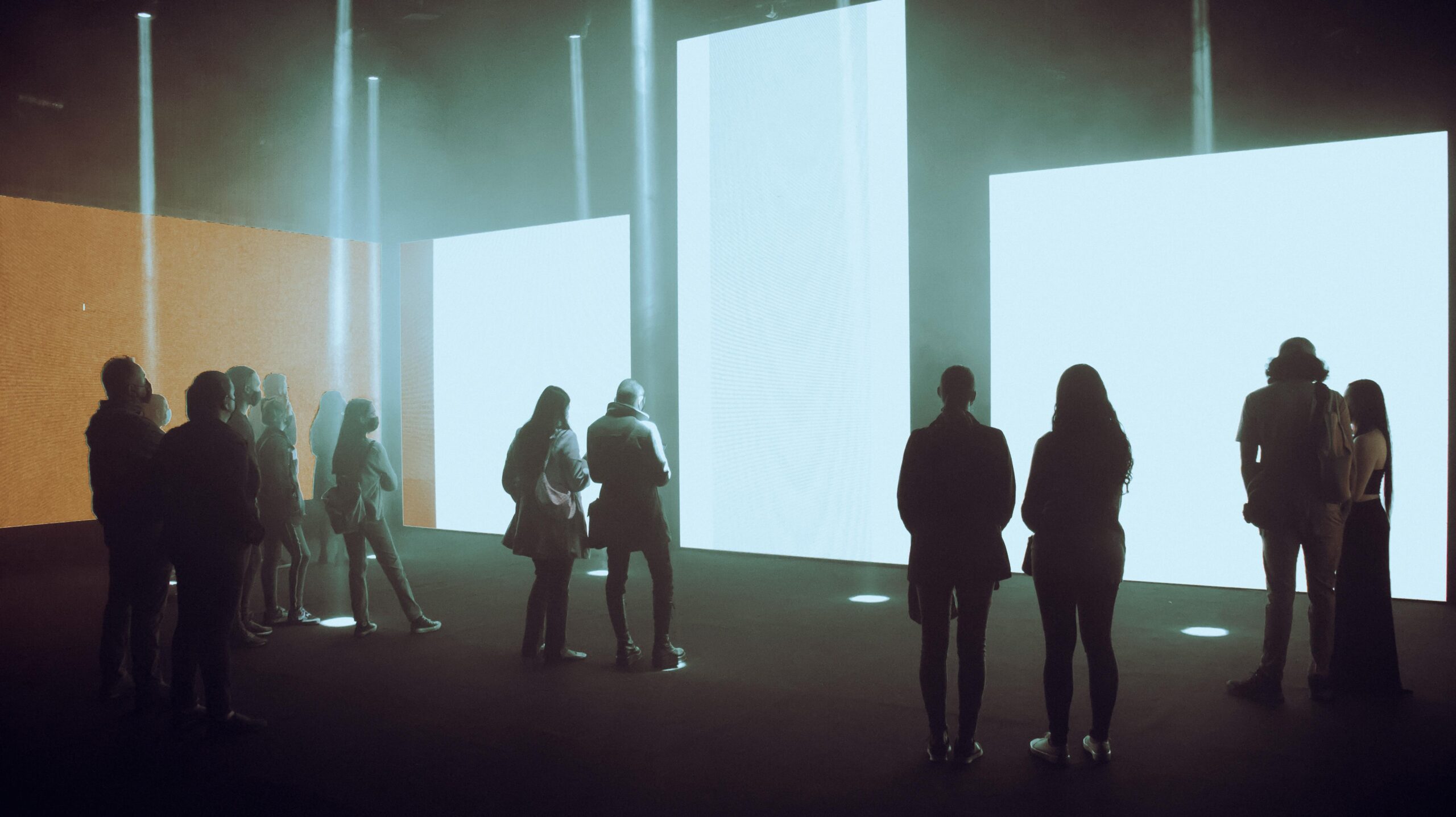
The intersection of sound, visual art, and data is opening unprecedented creative frontiers. Artists and technologists are discovering that audio can be more than just something we hear—it can become a bridge between abstract information and human experience.

This revolutionary approach transforms how we perceive both art and information, creating immersive experiences that engage multiple senses simultaneously. As technology advances, the boundaries between sonic landscapes and visual representations continue to blur, revealing new possibilities for expression and communication.
🎵 The Revolutionary Marriage of Sound and Visual Data
Sound has always been a fundamental aspect of human expression, but its role as a medium for data representation marks a profound evolution in both artistic and analytical practices. The concept of sonification—converting data into sound—has emerged as a powerful tool that transcends traditional visualization methods.
This fusion creates a multidimensional experience where information becomes tangible through auditory perception. Scientists, artists, and designers are collaborating to translate complex datasets into sonic experiences that reveal patterns imperceptible to the eye alone. From astronomical data converted into ethereal soundscapes to financial market trends expressed through rhythmic compositions, the applications are as diverse as they are fascinating.
The human ear can detect subtle variations in pitch, timbre, rhythm, and spatial positioning, making it an incredibly sophisticated instrument for perceiving nuanced information. When combined with visual elements, these sonic representations create a synesthetic experience that enhances comprehension and emotional engagement.
Understanding Data Sonification as Artistic Practice
Data sonification represents more than technical translation—it embodies a creative philosophy that recognizes sound as a legitimate language for conveying meaning. Artists working in this space must balance scientific accuracy with aesthetic consideration, ensuring their work remains both informative and emotionally resonant.
The process typically involves mapping data parameters to sonic characteristics. Temperature variations might correspond to pitch changes, while population density could influence volume or texture. These mapping decisions are where artistic vision meets analytical rigor, requiring practitioners to possess both technical skill and creative intuition.
Key Elements in Sound-Data Fusion
Several fundamental components define successful sonic data representations. Understanding these elements helps creators develop more effective and engaging experiences:
- Parameter mapping strategies that create intuitive connections between data and sound
- Timbral selection that enhances emotional and cognitive impact
- Temporal structuring that reveals patterns across different time scales
- Spatial audio techniques that add dimensional complexity
- Interactive elements allowing audience participation in data exploration
- Visual synchronization that reinforces sonic information
🎨 Historical Context: From Visual Music to Sonic Art
The relationship between sound and visual art has ancient roots, but the modern movement began gaining momentum in the early twentieth century. Pioneers like Wassily Kandinsky theorized about visual music, imagining paintings that could be “heard” and compositions that could be “seen.”
Experimental filmmakers in the 1920s and 1930s created abstract animations synchronized with music, laying groundwork for contemporary audiovisual practices. Oskar Fischinger and Norman McLaren pioneered techniques where visual forms danced in precise correlation with musical elements, establishing principles still relevant today.
The advent of electronic music in the 1950s and 1960s accelerated these explorations. Composers like Karlheinz Stockhausen and John Cage expanded sonic possibilities while questioning fundamental assumptions about music’s nature and purpose. Their experimental approaches opened doors for artists to consider sound as sculptural material capable of shaping space and perception.
Technology as Creative Catalyst
Contemporary technology has democratized access to sophisticated tools for sonic-visual creation. Software platforms now enable artists without engineering backgrounds to transform data into compelling audiovisual experiences. This accessibility has sparked an explosion of creative experimentation across disciplines.
Machine learning algorithms can now analyze visual content and generate corresponding soundscapes, or inversely, create visual representations from audio input. These AI-assisted processes introduce new creative possibilities while raising intriguing questions about authorship and artistic intention.
Real-time processing capabilities allow for interactive installations where audience movements, biometric data, or environmental conditions dynamically influence both sonic and visual elements. These responsive systems create unique experiences for each participant, blurring lines between artist, artwork, and audience.
Essential Technologies Driving Innovation
Several technological frameworks have become instrumental in advancing sonic-visual art practices:
- Digital audio workstations with visual programming capabilities
- Generative algorithms for procedural content creation
- Sensor technologies capturing environmental and biometric data
- Spatial audio systems creating immersive three-dimensional soundfields
- Projection mapping techniques synchronizing visuals with architectural spaces
- Virtual and augmented reality platforms enabling multisensory experiences
💡 Practical Applications Across Industries
Beyond artistic contexts, the fusion of sound and data visualization serves practical purposes across numerous fields. Scientific research increasingly employs sonification to detect patterns in complex datasets, from protein folding sequences to climate change indicators.
Medical professionals use sonic representations of biological data to monitor patient conditions, with subtle variations in sound alerting clinicians to potentially critical changes. This auditory monitoring allows simultaneous attention to multiple parameters without visual overload.
In education, converting abstract concepts into sonic-visual experiences helps students grasp difficult material through multiple sensory channels. Mathematical relationships, chemical processes, and historical patterns become more accessible when expressed through carefully designed audiovisual presentations.
Business Intelligence and Sonic Data
Corporate environments are discovering value in sonified data analytics. Financial traders can “hear” market movements while monitoring visual displays, potentially detecting anomalies faster than through vision alone. Project managers use sonic indicators to monitor workflow status, with audio alerts providing non-intrusive updates.
Marketing professionals employ sonic branding strategies that extend beyond simple jingles, creating comprehensive audio identities that reflect brand data and values. These sonic signatures become integral to customer experience across multiple touchpoints.
🎧 Creating Meaningful Sonic-Visual Experiences
Developing effective work in this domain requires consideration of both technical and aesthetic factors. Artists must understand their source material deeply—whether scientific data, social information, or abstract concepts—to create meaningful sonic translations.
The mapping process demands careful thought about which sonic parameters best represent specific data dimensions. Pitch might effectively convey continuous variables, while rhythm could represent cyclical patterns. Timbre and texture add additional layers of information without creating cognitive overload.
Balancing information density with aesthetic appeal presents ongoing challenges. Too much data creates sonic chaos; too little risks superficiality. Successful practitioners develop intuition about this balance through experimentation and audience feedback.
Design Principles for Sonic Data Art
Several guiding principles help creators develop more impactful work:
- Clarity: Ensuring the relationship between data and sound remains perceptible
- Consistency: Maintaining coherent mapping strategies throughout the piece
- Context: Providing sufficient information for audiences to understand the work
- Engagement: Creating experiences that invite sustained attention and exploration
- Accessibility: Considering diverse audience capabilities and backgrounds
- Innovation: Pushing boundaries while respecting fundamental perceptual principles
The Neuroscience Behind Sonic Perception
Understanding how humans process sound and integrate it with visual information provides crucial insights for creators. Our brains possess remarkable abilities to detect patterns, anticipate sonic developments, and extract meaning from complex auditory environments.
Research demonstrates that combining sonic and visual information can enhance memory retention and deepen emotional responses. The phenomenon of cross-modal perception means stimulation in one sensory channel influences processing in others, creating opportunities for reinforcement and enrichment.
Spatial hearing allows humans to localize sound sources and perceive acoustic environments three-dimensionally. Artists leveraging these capabilities through immersive audio systems create experiences that feel physically present rather than merely observed.
🌟 Notable Artists and Pioneering Projects
Contemporary practitioners are producing remarkable work that demonstrates the field’s potential. Ryoji Ikeda creates installations combining minimal electronic sounds with stark visual patterns, exploring the raw materials of audiovisual information. His work transforms gallery spaces into immersive environments where data becomes experiential.
Ryoichi Kurokawa merges field recordings with abstract imagery, creating pieces that blur boundaries between natural and synthetic. His compositions reveal hidden beauty in seemingly ordinary phenomena, from weather patterns to urban landscapes.
The collective TeamLab produces interactive environments where visitor presence generates both sonic and visual responses. Their work demonstrates how technology can create participatory experiences that evolve through collective interaction.
Educational Pathways and Skill Development
Aspiring practitioners can approach this interdisciplinary field through various educational routes. Traditional music conservatories increasingly offer programs in electronic composition and sound design. Art schools develop curricula combining coding, design thinking, and creative technology.
Self-directed learning remains viable, with abundant online resources covering everything from basic audio programming to advanced machine learning applications. Communities of practice provide support, feedback, and collaboration opportunities for emerging artists.
Developing hybrid skills—combining artistic sensibility with technical capability—proves essential. Understanding both creative expression and data analysis allows practitioners to make informed decisions about their work’s conceptual and technical aspects.
🚀 Future Horizons: Where Sound and Data Converge
The field continues evolving rapidly as new technologies emerge and creative practitioners push boundaries. Artificial intelligence increasingly participates in creative processes, generating novel sonic-visual combinations that human artists might never conceive.
Brain-computer interfaces may soon allow direct translation of neural activity into audiovisual experiences, creating unprecedented forms of expression. Imagine compositions generated from emotional states or visualizations of thought patterns themselves.
Climate data sonification projects are making environmental changes more immediately perceptible, potentially influencing public understanding and policy decisions. These applications demonstrate how artistic approaches to data can serve social and political purposes beyond aesthetic experience.
Emerging Trends to Watch
Several developments promise to shape the field’s trajectory:
- Volumetric audio technologies creating fully three-dimensional sonic spaces
- Haptic feedback systems adding tactile dimensions to audiovisual experiences
- Quantum computing enabling real-time processing of previously impossible data scales
- Biotechnology incorporating living systems into sonic-visual artworks
- Decentralized platforms allowing global collaboration on large-scale projects
Ethical Considerations in Data Art
Working with data—particularly information about people or sensitive topics—raises important ethical questions. Artists must consider privacy implications, potential for misrepresentation, and responsibilities inherent in translating factual information into aesthetic experiences.
Transparency about data sources, processing methods, and artistic intentions helps audiences critically engage with work rather than accepting it uncritically. This openness strengthens both artistic integrity and public trust.
The potential for data art to influence perceptions and decisions means creators should consider possible interpretations and misinterpretations. While artistic freedom remains paramount, awareness of potential impacts demonstrates social responsibility.

🎼 Embracing the Sonic Future
The fusion of art, sound, and data represents more than technical novelty—it embodies a fundamental shift in how we communicate, understand, and experience information. As our world becomes increasingly data-saturated, finding meaningful ways to engage with this abundance becomes crucial.
Sonic approaches offer paths through information overload by leveraging our innate capacity for auditory pattern recognition. They remind us that knowledge exists not only in visual forms but in temporal, spatial, and multisensory dimensions.
For creators, this field offers boundless opportunities to develop unique voices and perspectives. The interdisciplinary nature demands continuous learning and adaptation, but rewards practitioners with the ability to work at the cutting edge of technology and expression.
Whether approaching from artistic, scientific, or commercial angles, those engaging with sonic data visualization participate in shaping how future generations will understand and interact with information. The sounds we create today may become the language through which tomorrow’s insights are communicated.
As technology continues advancing and creative practitioners push boundaries, we can expect increasingly sophisticated and meaningful integrations of sound, vision, and data. This ongoing evolution promises to enrich both our aesthetic landscape and our capacity to comprehend the complex world we inhabit. The sonic visions being unleashed today are merely preludes to symphonies yet unimagined.